This is Yoga Utama blog's

Thank you for visiting.

This is Yoga Utama blog's

Thank you for visiting.

This is Yoga Utama blog's

Thank you for visiting.

This is Yoga Utama blog's

Thank you for visiting.

This is Yoga Utama blog's

Thank you for visiting.

Selasa, 15 Maret 2011

McLaren F1

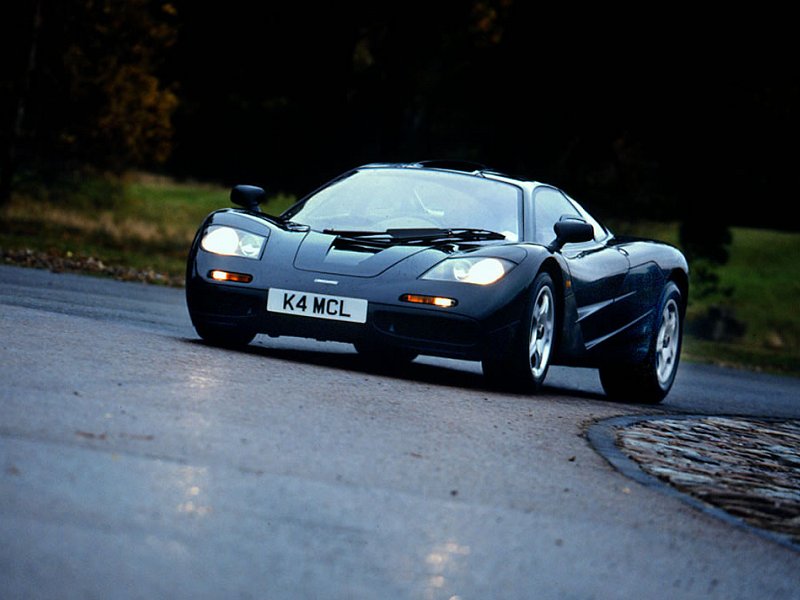
McLaren F1 is a super car designed and manufactured by McLaren Automotive. Originally a concept conceived by Gordon Murray, he convinced Ron Dennis to back the project and engaged Peter Stevens to design the exterior of the car. On 31 March 1998, it set the record for the fastest road car in the world, 240 mph (386 km/h). As of Jan 2011, the F1 is still the fastest naturally aspirated road car in the world.
The car features numerous proprietary designs and technologies; it was designed and built with no compromises to the original design concept laid out by Gordon Murray. It is lighter and has a more streamlined structure than even most of its modern rivals and competitors despite having one seat more than most similar sports cars, with the driver's seat located in the middle (and slightly forward of the passengers seating position providing excellent driving visibility). It features a powerful engine and is somewhat track oriented, but not to the degree that it compromises everyday usability and comfort. It was conceived as an exercise in creating what its designers hoped would be considered the ultimate road car. Despite not having been designed as a track machine, a modified race car edition of the vehicle won several races, including the 24 Hours of Le Mans in 1995, where it faced purpose-built prototype race cars. Production began in 1992 and ended in 1998. In all, 106 cars were manufactured, with some variations in the design.
In 1994, the British car magazine AutoCar stated in a road test regarding the F1, "The McLaren F1 is the finest driving machine yet built for the public road." and that "The F1 will be remembered as one of the great events in the history of the car, and it may possibly be the fastest production road car the world will ever see.
McLaren F1 logo.
McLaren F1
Manufacturer McLaren Automotive
Production 1992–1998
(100 produced)
Assembly Woking, Surrey, England
Successor McLaren MP4-12C
Class Sports car
Body style 2-door 3-seat coupé
Layout RMR layout
Engine 60° 6.1 L BMW S70/2 V12
Transmission 6-speed manual
Wheelbase 2,718 mm (107.0 in)
Length 4,287 mm (168.8 in)
Width 1,820 mm (71.7 in)
Height 1,140 mm (44.9 in)
Curb weight 1,140 kg (2,513 lb)
Related McLaren F1 LM
McLaren F1 GTR
Designer Gordon Murray & Peter Stevens
Chief engineer Gordon Murray's design concept was a common one among designers of high-performance cars: low weight and high power. This was achieved through use of high-tech and expensive materials like carbon fibre, titanium, gold, magnesium and kevlar. The F1 was the first production car to use a carbon-fibre monocoque chassis.

The three seat setup inside an F1.
Gordon Murray had been thinking of a three-seat sports car since his youth, but when Murray was waiting for a flight home from the fateful Italian Grand Prix in 1988; Murray drew a sketch of a three seater sports car and proposed it to Ron Dennis, pitched as the idea of creating the ultimate road car, a concept that would be heavily influenced by the Formula One experience and technology of the company and thus reflect that skill and knowledge through the McLaren F1.
Murray declared that "During this time, we were able to visit with Ayrton Senna (the late F1 Champion) and Honda's Tochigi Research Center. The visit related to the fact that at the time, McLaren's F1 Grand Prix cars were using Honda engines. Although it's true I had thought it would have been better to put a larger engine, the moment I drove the Honda NSX, all the benchmark cars—Ferrari, Porsche, Lamborghini—I had been using as references in the development of my car vanished from my mind. Of course the car we would create, the McLaren F1, needed to be faster than the NSX, but the NSX's ride quality and handling would become our new design target. Being a fan of Honda engines, I later went to Honda's Tochigi Research Center on two occasions and requested that they consider building for the McLaren F1 a 4.5 litre V10 or V12. I asked, I tried to persuade them, but in the end could not convince them to do it, and the McLaren F1 ended up equipped with a BMW engine."
Later, a pair of Ultima MK3 kit cars, chassis numbers 12 and 13, "Albert" and "Edward", the last two MK3s, were used as "mules" to test various components and concepts before the first cars were built. Number 12 was used to test the gearbox with a 7.4 litre Chevrolet V8 to mimic the torque of the BMW V12, plus various other components like the seats and the brakes. Number 13 was the test of the V12, plus exhaust and cooling system. When McLaren was done with the cars they destroyed both of them to keep away the specialist magazines and because they did not want the car to be associated with "kit cars".
The car was first unveiled at a launch show, 28 May 1991, at The Sporting Club in Monaco. The production version remained the same as the original prototype (XP1) except for the wing mirror which, on the XP1, was mounted at the top of the A-pillar. This car was deemed not road legal as it had no indicators at the front; McLaren was forced to make changes on the car as a result (some cars, including Ralph Lauren's, were sent back to McLaren and fitted with the prototype mirrors). The original wing mirrors also incorporated a pair of indicators which other car manufacturers would adopt several years later.
The car's safety levels were first proved when during a testing in Namibia in April 1993, a test driver wearing just shorts and t-shirt hit a rock and rolled the first prototype car several times. The driver managed to escape unscathed. Later in the year, the second prototype (XP2) was especially built for crashtesting and passed with the front wheel arch untouched.

History


The McLaren F1's engine compartment contains the mid-mounted BMW S70/2 engine and uses gold foil as a heat shield in the exhaust compartment.
Gordon Murray insisted that the engine for this car be naturally aspirated to increase reliability and driver control. Turbochargers and superchargers increase power but they increase complexity and can decrease reliability as well as introducing an additional aspect of latency and loss of feedback. The ability of the driver to maintain maximum control of the engine is thus decreased. Murray initially approached Honda for a powerplant with 550 bhp (410 kW; 560 PS), 600 mm (23.6 in) block length and a total weight of 250 kg (551 lb), it should be derived from the Formula One powerplant in the then-dominating McLaren/Honda cars.
When Honda refused, Isuzu, then planning an entry into Formula One, had a 3.5 V12 engine being tested in a Lotus chassis. The company was very interested in having the engine fitted into the F1. However, the designers wanted an engine with a proven design and a racing pedigree.

Acceleration

  • 0-30 mph (48 km/h): 1.8 s
  • 0–60 mph (97 km/h): 3.2 s
  • 0–100 mph (160 km/h): 6.3 s
  • 0–124.28 mph (200.01 km/h): 9.4 s
  • 0–150 mph (240 km/h): 12.8 s
  • 0–200 mph (320 km/h): 28 s
  • 30 mph (48 km/h)-50 mph (80 km/h): 1.8 s, using 3rd/4th gear
  • 30 mph (48 km/h)-70 mph (110 km/h): 2.1 s, using 3rd/4th gear
  • 40 mph (64 km/h)-60 mph (97 km/h): 2.3 s, using 4th/5th gear
  • 50 mph (80 km/h)-70 mph (110 km/h): 2.8 s, using 5th gear
  • 180 mph (290 km/h)-200 mph (320 km/h): 7.6 s, using 6th gear
  • 0–400 m: 11.1 s at 138 mph (222 km/h)
  • 0–1000 m: 19.6 s at 177 mph (285 km/h)

Top speed

  • With rev limiter on: 231 mph (372 km/h)
  • With rev limiter removed: 243 mph (391 km/h)

Rabu, 09 Maret 2011

Koenigsegg CCX


Koenigsegg CCX
Koenigsegg CCX
Manufacturer Koenigsegg
Production 2006–present
Predecessor Koenigsegg CCR
Successor Koenigsegg CCXR
Class Sports car
Body style 2-door roadster
Layout Rear mid-engine, rear-wheel drive
Engine 4.7 L twin-supercharged V8
Transmission 6-speed manual
Wheelbase 2,660 mm (104.7 in)
Length 4,293 mm (169.0 in)
Width 1,996 mm (78.6 in)
Height 1,120 mm (44.1 in)
Curb weight 1,180 kg (2,601 lb)
Designer Sven-Harry Ã…kesson
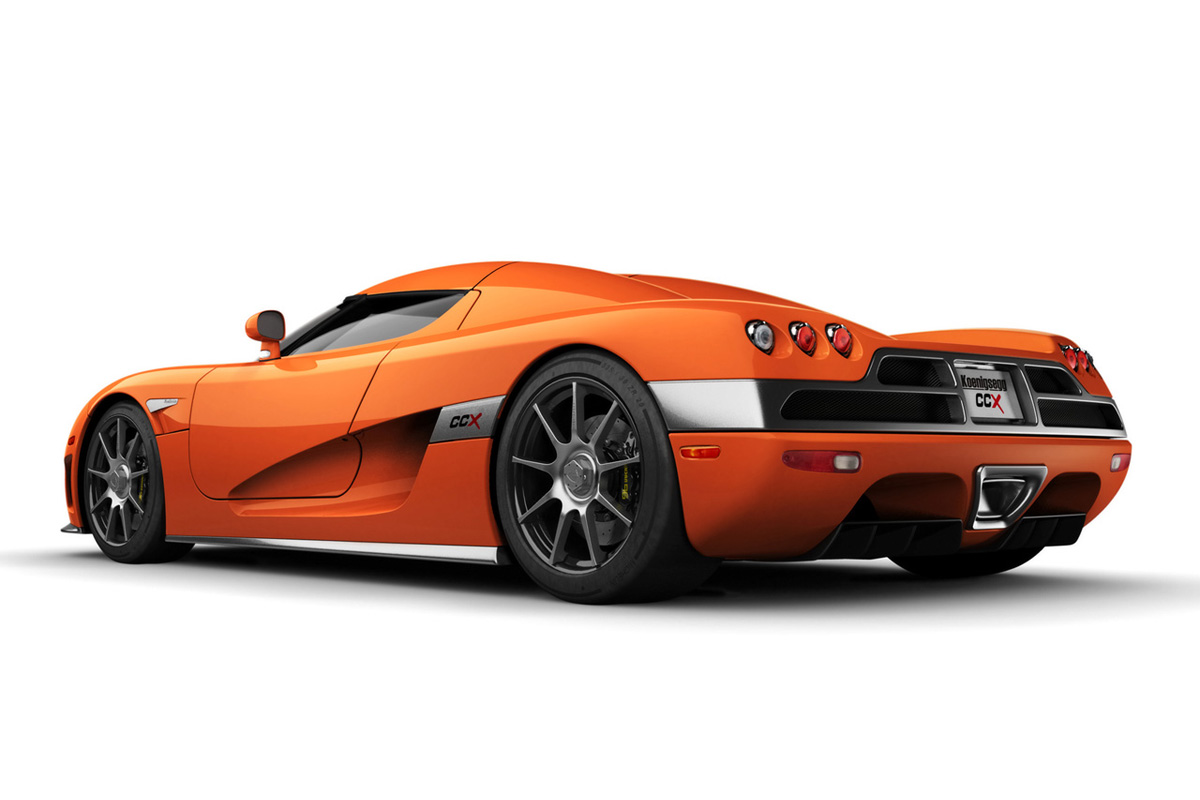
The Koenigsegg CCX is a mid-engined roadster from Swedish car manufacturer Koenigsegg. The CCX has been engineered to comply with the U.S. regulation and market demands and is a newer design that replaced the Koenigsegg CCR.
CCX is an abbreviation for Competition Coupé X; the X commemorating the 10th anniversary (being the Roman numeral for ten) of the completion and test drive of the first CC vehicle in 1996.
The CCX was first unveiled on February 28, 2006 at the 2006 Geneva Motor Show although its existence was announced earlier. A derivative known as the CCXR is available, the main difference being that CCXR's engine is tuned to run on biofuel. The different fuel and tune allows the CCXR to produce 25% more power than the CCX.

 Development

Koenigsegg began the CCX project with the aim of entering the world market, though particularly the United States car market. Development engineer Magnus Jaasund said "We wanted to go into the world market, but we couldn’t do it with the old car. To sell cars to the North American market many alterations were made to the design of the CCR; the previously used Ford Modular engine was replaced by a Koenigsegg engine designed to run on 91 octane fuel, readily available in the United States, and to meet the Californian emission standards.

Interior.
The front bumper of the CCX is designed to be safer in low speed collisions than previous Koenigseggs and the whole body is 3.46 in (88 millimeters) longer to comply with the United States' rear impact regulations. Additionally the CCX can display United States or European number plates.
The CCX is 1.6 in (40.6 mm) taller than the CCR and, combined with the carbon fiber reinforced plastic sports seats by Sparco, the CCX allows for 2 in (50.8 mm) of extra headroom that Autoweek reviewer Mark Vaughn hypothesizes is "to accommodate U.S. NBA stars. The electronic control unit has also received an upgrade over the CCR meaning that the CCX is without physical fuses and it is lighter than the previous system.

Specifications  

Performance

The CCX can accelerate from 0–62 mph (100 km/h) in 3.2 seconds and from 0–124 mph (200 km/h) in 9.8 seconds. According to Koenigsegg it has a top speed of approximately 250 mph (400 km/h), although this has not been officially verified. On 15 June 2008, a standard fully equipped CCX was independently timed by sport auto in achieving a record 0-186-0 mph (0-300–0 km/h) in 29.2 seconds, beating the Mercedes-Benz McLaren SLR 722 Edition, the Lamborghini Murciélago LP640, the Porsche 997 GT2, the Alpina B6 S (based on the BMW 6 Series), and the Corvette Z06.

Engine


The engine of a Koenigsegg CCX at the 2006 Geneva Motor Show
Previous Koenigsegg models were powered by Ford Modular V8 engines sourced from the U.S. Though also based on the Ford Modular architecture the engine of the CCX was thoroughly re-engineered by Koenigsegg themselves and is assembled at the Koenigsegg factory. The engine block for the dual overhead camshaft, 4 valve per cylinder 4.7 liter 288 cu in (4,719 cc) V8 is cast for them by Grainger & Worrall, a British company that produces drivetrain components for Formula One cars. The engine block is made of 356 Aluminium that has undergone a T7 heat treatment, a form of accelerated precipitation strengthening. The aluminium alloy is stronger than the previous engine and allows a thinner, thus lighter, engine block that will withstand higher cylinder pressures. The engine is boosted by two centrifugal superchargers that provide 17.5 psi (1.2 bar) of boost with an 8.2:1 compression ratio. The engine produces 806 bhp (601 kW; 817 PS) at 6900 rpm and 678 lb·ft (919 N·m) of torque at 5700 rpm on 91 octane (U.S. rating) gasoline. The engine is lubricated with a dry sump system with a separate oil pump, the pistons are cooled by oil sprayed onto them and the oil itself has an external cooler. The CCX does 14 mpg (17 l/100 km) in combined cycle and 18 mpg (13 l/100 km) in highway travel.
Exterior

A CCX at the 2006 SEMA car show in Las Vegas
The CCX is a two-door targa top and the removable roof can be stored under the front trunk meaning that, unlike many of its competitors, it can be changed at any location, not only one where the roof can be safely left. The body, made of pre-impregnated carbon fiber and Kevlar, is 169 in (4,300 mm) long, 78.6 in (2,000 mm) wide and 44.1 in (1,120 mm) tall with a ground clearance of 3.9 in (99 mm). As with all previous Koenigsegg models, the "dihedral synchro-helix" actuation doors rotate forward and upwards similar to scissor doors though the Koenigsegg design avoids the problem of the open door obscuring the passenger's entry or exit.
The CCX has a frontal area of 2,894 sq in (1.867 m2) and a drag coefficient of just 0.30. It also has a flat underside with venturi tunnels at the rear and an optional rear spoiler to improve aerodynamics. Between the 2 speedster humps (humps behind the seats) is a vortex generator used as a ram-air intake that allows higher pressure in the air box without a roof scoop that would increase the frontal area. At 124 mph (200 km/h)


Wheels and brakes


The standard magnesium-alloy rear wheel of a CCX
The standard CCX wheels are Koenigsegg's magnesium alloy wheels, though the option to upgrade to carbon/magnesium wheels which each weigh 6.6 pounds (3.0 kg) less than the standard wheels is available. The front wheels have a diameter of 19 inches (480 mm) and the rear, 20 inches (510 mm). Each of the wheels is attached by center locking wheel nuts. The car comes with Michelin Pilot Sport 2 unidirectional tires with asymmetric tread. The front tires have codes of 255/35 Y19 and the rear 335/30 Y20.
The front and rear cast iron disc brakes are 14.3 in (360 mm) across with 1.3 inches (33 mm) of contact at any point and have 6 piston calipers. The brakes can be upgraded to SystemST carbon ceramic brakes which weigh 4.4 pounds (2.0 kg) less per wheel, a diameter of 15 in (380 mm) with 1.3 in (33 mm) of contact and eight piston brake calipers.

Top Gear

In 2007, the CCX was the fastest car to complete a lap of the BBC Top Gear circuit, in a time of 1:17.6 on the Power Lap, until it was beaten by the Ascari A10 with a time of 1:17.3. The car originally lapped the circuit in 1:20.4, but was then fitted with a non-standard rear spoiler (Subsequently referred to in the CCX's and the Agera's option list as the 'Top Gear Wing') to provide downforce after the show's test driver (The Stig) spun the original version off the track. The Stig purportedly recommended this modification, predicting that the car would then be the fastest ever round Top Gear's track but Koenigsegg later stated that the improvement was due to adjustments to the chassis and suspension settings and not the addition of the rear spoiler.

CCXR


One of six Koenigsegg CCXR Edition at the 2008 Geneva Motorshow.
The CCXR is an "environmentally-friendly" version of the CCX, powered by a modified twin-supercharged V8 engine from the CCX, converted to use E85 or E100 ethanol fuel as well as standard 98 octane petrol. When run on regular petrol, the CCXR develops 806 bhp (601 kW), but when the car is run on E85 Biofuel, the CCXR develops 1,018 bhp (759 kW). Weight-to-power ratio is 2.76 lb/hp. Torque is 782 ft·lb (1,060 N·m). The CCXR can achieve 62 mph (100 km/h) in 2.9 seconds. Christian von Koenigsegg is quoted as saying, "Our engineers couldn't quite believe the figures when we tested the car".The increased power is a result of the cooling properties of ethanol in the engine's combustion chambers allowing for a higher pressure in the cylinder and the biofuel having a higher octane rating of 113 RON compared to 95 RON for gasoline in North America and 100 RON for gasoline in Europe. The increase in octane rating allows greater spark advance before detonation occurs. Due to the lower energy content of ethanol the CCXR burns slightly more fuel than the CCX with about 15 mpg (17L/100 km).The only changes to the engine are modified fuel injectors, upgraded fuel lines and piston rings and a higher boost setting on the superchargers.

CCGT

Koenigsegg CCGT
White Koenigsegg CCGT Goodwood 2007.jpg
Manufacturer Koenigsegg
Production 2007
Class GT1
Body style Racecar
Engine 5.0 naturally-aspirated DOHC 32-valve V8
600 hp (441 kW)
Transmission 6-speed sequential
Designer Sven-Harry Ã…kesson
The Koenigsegg CCGT is a one-off racing car built by Koenigsegg. Making its début appearance at the 2007 Geneva Motor Show, the CCGT is designed to compete in the grand tourer categories of sportscar racing.
Mechanically, the CCGT is very similar to the CCX. However, the most noticeable difference between the CCGT and the CCX is the engine - in order to meet the regulations for the GT1 class as set by both the ACO and the FIA, the two centrifugal superchargers were removed from the DOHC V8 engine. Its capacity was also increased from 4.7 litres to 5.0 litres to partially compensate for the loss of power resulting from the removal of the two superchargers. The power output is an air restricted 600 horsepower (591 bhp).
Through the extensive use of carbon fibre in the car's chassis and bodywork, the CCGT's weight is just 1,000 kg, allowing Koenigsegg's racing teams to use up to 100 kg of ballast freely to make the car meet the 1,100 kg minimum weight requirement for cars in its category.
Just after the cars development, the FIA changed the GT1 regulations so that there had to be a minimum of 350 road cars produced per year of the model that was to compete. As Koenigsegg's annual production volume was much less than this, they were unable to enter the car into GT racing. The CCGT has been driven at closed circuit sessions and events such as the Goodwood Festival of Speed but never entered into any racing series.
Koenigsegg have yet to announce any future participation in GT racing.

Edition

In March 2008, two models (the CCX Edition and the CCXR Edition) were launched at the Geneva Motor Show. Both models are fitted with a remapped, 4.8 liter twin-supercharged Koenigsegg engine. The engine tune in the CCXR Edition is more powerful than that of the standard CCX, developing 1,018 bhp (759 kW) at 7000 rpm and 797 ft·lb (1,081 N·m) of torque at 5600 rpm. The CCX Edition develops 888 bhp (662 kW) at 7000 rpm and 679 ft·lb (921 N·m) of torque at 5800 rpm. In total the Edition produces over 772 lb (350 kg) of downforce at 155 mph (249 km/h).
The Edition CCXR and CCX are more track oriented compared to the standard models, being equipped with stiffer springs and anti-roll bars, reset dampers and a lowered chassis. The Edition CCXR and the CCX also feature a fully visible carbon body, a large adjustable rear wing, larger front splitter and side strakes and a unique forged wheel design.
The interior is also reworked and features: color matched leather carpets, Koenigsegg Edition side step plates, Edition chronograph instrument cluster, a new Edition only layout for the center console control panels, and features a special version of the Koenigsegg Chronocluster including a redesigned center console. All other extra equipment for the Koenigsegg Edition CCXR and CCX comes as standard: carbon wheels, special interior trim and color, rearview camera, Satnav or Bluetooth, amplifiers, complete Inconell exhaust system.
On March 19, 2009, Koenigesegg announced, via the Cars' UK site, that production of the CCXR Edition will be limited to just four cars, and that of the CCX Edition to only two. This was partly in response to the decline in the world economy, but also because Koenigsegg are now committed to a environmentally responsible future, as demonstrated by the Koenigsegg Quant, which was shown at the Geneva Motor Show in 2009.Both models are fitted with a remapped, 4.8 litre twin-supercharged Koenigsegg engine, and have been track-tuned by the inclusion of modified shock absorbers, stiffer springs and anti-roll bars, reset dampers and a lowered chassis.

Saleen S7 Twin Turbo

S7 Twin Turbo

Saleen S7 Twin Turbo
Manufacturer Saleen
Production 2005–2009
Assembly Irvine, California, United States
Predecessor Saleen S7
Class Sports car
Body style 2-door coupe
Layout Mid-engine, rear-wheel drive
Engine 7.0 L twin-turbocharged V8
Transmission 6-speed manual
Wheelbase 106.3 in (2700 mm)
Length 187.95 in (4774 mm)
Width 78.35 in (1990 mm)
Height 40.98 in (1041 mm)
Curb weight 2,950 lb (1,338 kg)
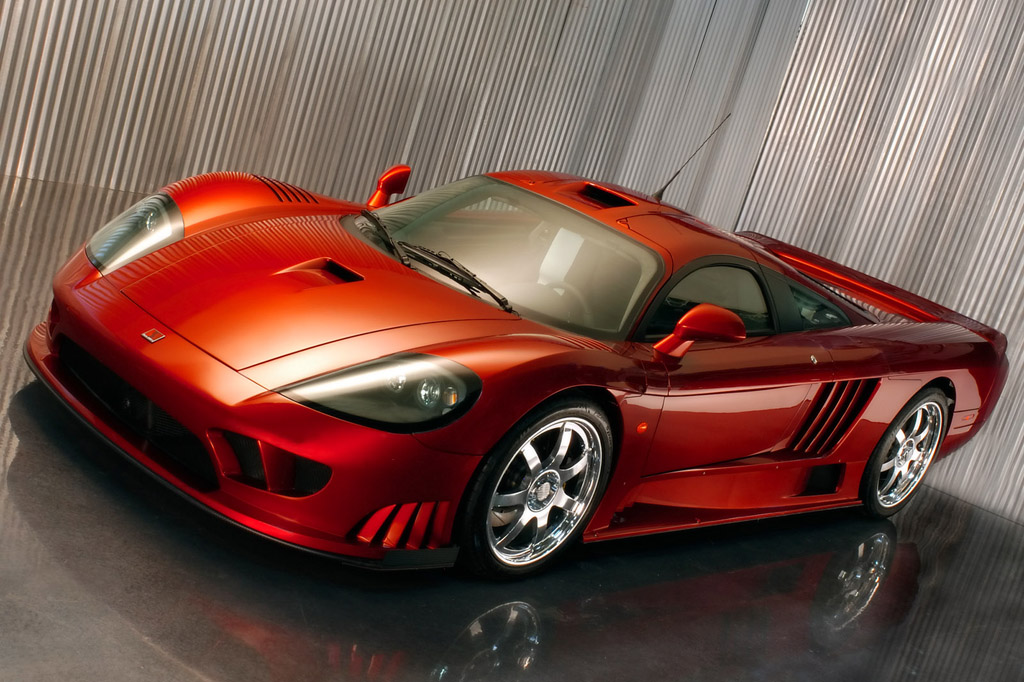
The Saleen S7 Twin Turbo was an updated revision of the original S7. Although the initial concept for the S7 incorporated twin-turbochargers, they were not used on the production car. The twin-turbocharged version later developed in 2005 went on sale for $585,296 USD (approx. GB£295,559, c.2007/€435,203, c.2007), replacing standard S7 production. 

Changes

The engine was upgraded with two Garrett turbochargers producing 5.5 psi (0.4 bar) of boost, increasing the maximum power to 750 horsepower (760 PS/559 kW) at 6300 rpm, and the maximum torque to 700 lb·ft (949 N•m) at 4800 rpm. The front and rear diffusers and the rear spoiler were also reworked to increase downforce by 60%.
Gear 1 2 3 4 5 6 Final Drive
Ratio 2.86:1 1.61:1 1.14:1 0.96:1 0.81:1 0.64:1 3.70:1

 Performance (Mfg Estimates)

  • 0-60 mph (97 km/h): 2.8 sec
  • 0-100 mph (161 km/h): 5.9 sec
  • 0-200 mph (322 km/h): 27 sec
  • Quarter-mile: 10.5 sec
  • Top speed: 248 mph (399 km/h)
 Competition Packages

In 2006, Saleen offered an optional competition package for the S7 Twin Turbo. The package offers a 33% increase in power, to a total of an approximate 1000 horsepower (1014 PS/746 kW), as well as changes to the suspension, a revised front and rear diffuser, and an optional aerodynamic package with carbon fiber front and rear spoilers.
Currently Saleen claims a top speed of 248 mph (399 km/h) for the S7 Twin Turbo but with the 1,000 bhp (746 kW; 1,014 PS) upgrade there are rumors that the car has already topped over 260 mph (420 km/h) in testing.

SSC Aero

SSC Ultimate Aero II

2011 SSC Ultimate Aero II
2011 SSC Ultimate Aero II – Click above for high-res image gallery


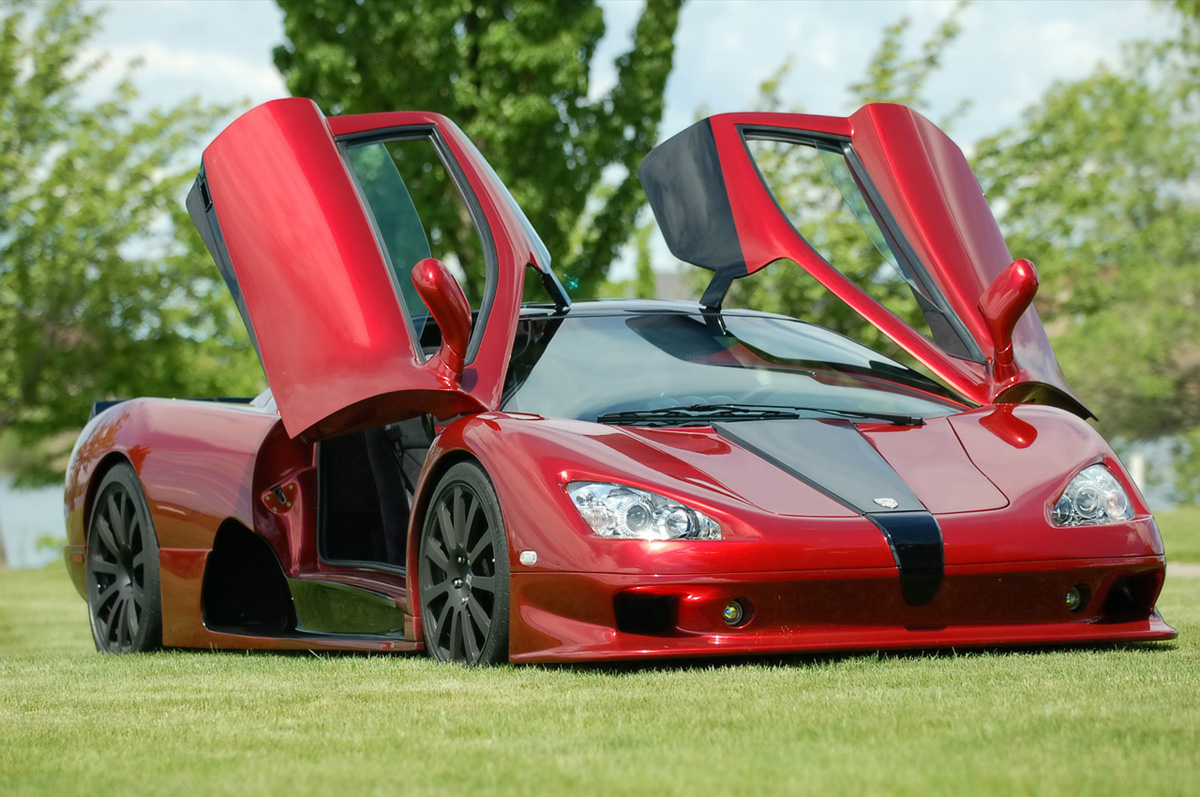
The SSC Ultimate Aero is an American-built mid-engine supercar by Shelby SuperCars. The higher-performance limited production version, the SSC Ultimate Aero TT produces more emissions-legal horsepower than any other production automobile in the world and previously held the Guinness book of world records record for being the fastest production car in the world (succeeded by the 2010 Bugatti Veyron Super Sport), with a recorded speed of 412.28 km/h (256.18 mph). This speed was achieved during tests on September 13, 2007 West Richland, Washington, United States and verified by Guinness World Records on October 9, 2007. This speed however does not reflect the Ultimate Aero TT's full potential. SSC estimates that the newer, more powerful and lighter weight 2009 Ultimate Aero TT is capable of a top speed of over 270 mph (430 km/h). The SSC Ultimate Aero does not have electronic aids such as ABS brakes or traction control because (to quote Jerod Shelby) "Early design philosophy on the car was to make it a drivers car. I wanted a car that you not only throttled with your right foot but at times you could steer with your right foot.".
The Aero and the Shelby SuperCars company are the brainchildren of Jerod Shelby (no relation to retired racing driver and sportscar builder Carroll Shelby), who started out building exotic "replicars" including a Fiero-based Ferrari F355 replica and a Lamborghini Diablo replica based on a spaceframe which later was used in the Ultimate Aero prototype. Jerod later moved from building replicas to designing his first Supercar and after seven years it finally began to take shape. Although the basic Aero model is no longer produced, the Ultimate Aero is still in production with an MSRP of around $650,000.

Manufacturer Shelby SuperCars
Production 2006–present
Assembly United States
Successor TBA
Body style 2-seat Berlinetta
Layout Rear mid-engine, rear-wheel drive
Engine 6.34 litre 387.2 cu in V8
Length 4,470 mm (176.0 in)
Width 2,080 mm (81.9 in)
Height 1,090 mm (42.9 in)
Curb weight 1,292 kg (2,848 lb)

Ultimate Aero EV

SSC announced the production of the Ultimate Aero EV, an electrical version of the sports car. The released specifications include using 500 horsepower (373 kW) electric motor, with SSC also exploring the potential of using 2 engines in 2 or 4 wheel drive configuration. The SSC, once in production, will be the fastest electric car on the market. "I think we can do it faster, leaner and cleaner than any other manufacturer," claims the SSC founder, Jerod Shelby. SSC planned to produce its first prototype in February 2009, with production to begin as early as Q4 of 2009.
As part of the production plan, SSC also announced it had contracted with Sheffield International Finance Corporation to initiate the company's first acceptance of outside capital since its inception.
SSC announced electric powertrain and Ultimate Aero EV specifications. "SSC will display its AESP in the Ultimate Aero EV in order to prove that electric-powered vehicles will not only match but also provide more linear power ... and overall performance than internal combustion cars. The Ultimate Aero EV uses a twin motor AESP producing an astounding 1,000 hp (746 kW) and 800 lb·ft (1,100 N·m) of torque enabling it to rocket to 60 mph (97 km/h) in a mere 2.5 seconds and reach a top speed of 208 mph (335 km/h). Not only does the Ultimate Aero EV have a range of 150–200 miles on a single charge, but SSC's "Charge on the Run" onboard charging system allows for full battery recharges in as little as 10 minutes. Mind you, this is not the solution for perpetual motion." 

Speed attempt

SSC tested the top speed capability of the Ultimate Aero TT on March 22, 2007. The original test was scheduled for March 21, 2007 but was called off due to bad weather conditions. SSC closed down a 12-mile (19 km) stretch of U.S. Route 93 in Nevada for the event. Their goal was to replace the Bugatti Veyron as the fastest production car ever produced, which at the time could achieve 253.7 mph (408.3 km/h). Simulation and testing at NASA's Virginia facility had shown that the Ultimate Aero TT is theoretically capable of approximately 273 mph (439 km/h). The March 22nd attempt failed to break the record, due to sub-optimal conditions. Test driver Rick Doria reported "wheel-spin" at speeds above 190 mph (310 km/h). Despite the failure of the attempt, the car still reached 389 km/h (242 mph).
SSC announced they had broken the speed record for the world's fastest production car with 412.28 km/h (256.18 mph) in West Richland, WA on September 13, 2007. The reported record speed came from an average of two runs in opposite directions, in accordance with FIA Speed Records rules. The first run clocked 414.31 km/h (257.44 mph) and the return trip 410.24 km/h (254.91 mph). The results of this test, verified by Guinness World Records on October 9, 2007, gave the SSC Ultimate Aero the title of world's fastest production car, with a top speed of 412.28 km/h (256.18 mph). This beat the previous record holder, the Bugatti Veyron, that had a top speed of 253.81 mph (408.47 km/h). However, the Super Sport version of the Veyron has since reclaimed the title.
In addition to the fastest production car record, SSC also applied for the world record for the highest horsepower for an emissions-legal production automobile.
The record-breaking 2007 Shelby SuperCars Ultimate Aero Chassis #TT-02 was later put into auction by Shelby SuperCars, which also included SSC World Record commemorative watch, key fob, original record-breaking wheels and tires, framed official Guinness World Records certificate with commemorative photo signed by Shelby SuperCars team.
The car's record was broken on July 4, 2010 by the Bugatti Veyron Super Sport, which reached a certified top speed of 431.072 km/h (267.86 mph).

Selasa, 08 Maret 2011

10 Motor Tercepat

1. Dodge Tomahawk


Mesin: 10-cylinder 90-degree V-type
Kecepatan Max: 350 miles per jam (560 km / jam)
Tenaga: 500 Tenaga Kuda (370 kW) @ 5600 rpm (45 kW/L)
Transmission: 2-speed manual
harga US$ 555,000

2. Suzuki Hayabusa


Mesin: 1340 cc (82 cu in), 4-stroke, four-cylinder, liquid-cooled, DOHC, 16-valve
Kecepatan Max: 248 miles per jam (397 km / jam)
Tenaga: 197 Tenaga Kuda (147 kW) @ 6750 rpm 147kW
Transmission: 6-speed, constant mesh
harga $13,199  
 3. MTT Turbine Superbike Y2K


Mesin: 227 miles per jam (365 km / jam)
Kecepatan Max: Rolls-Royce 250-C20 turbo shaft
Tenaga: 320 Tenaga Kuda (239 kW) @ 52,000 rpm
Transmission: 2-speed automatic
harga US$150,000 (US$185,000 in 2004)
4. Honda CBR1100XX Blackbird


Mesin: 1137cc liquid-cooled inline four-cylinder
Kecepatan Max: 190 miles per jam (310km / jam)
Tenaga: 114 kW (153 hp) @ 10,000 rpm
Transmission: Close-ratio 6-speed
harga $10,599
5. Yamaha YZF R1


Mesin: Forward Inclined Parallel 4-cylinder, 20 valves, DOHC, liquid-cooled
Kecepatan Max: 186miles per jam (297 km / jam)
Tenaga: 128.2 Tenaga Kuda (95.6 kW) at 10000 rpm
Transmission: Constant mesh 6-speed
harga $13,290   
6. MV Agusta F4 1000 R


Mesin: liquid cooled, inline, 4 cylinder, DOHC, 16 radial valves
Kecepatan Max: 185 mph (299 km / jam)
Tenaga: 174 Tenaga Kuda (128 kW)
Transmission: multi-disc wet clutch, 6 speed cassette gearbox
harga $22,995   
7. Kawasaki Ninja ZX-11/ZZ-R1100


Mesin: 1052 cc 4-stroke, 4-cylinder, DOHC, liquid-cooled
Kecepatan Max: 176 miles per jam (283km / jam)
Tenaga: 108 kW (147 PS) @ 10,500 rpm
Transmission: 6 speed
harga $7999   
8. Aprilia RSV 1000R Mille


Mesin: 998 cc 60 degree V-twin Mesin
Kecepatan Max: 175 miles per jam (281 km / jam)
Tenaga: 105.24 kW (143.09 PS; 141.13 hp) @ 10000 rpm
Transmission: 6 speed, chain drive
harga $13,899   
9. BMW K 1200 S


Mesin: 16 valves, 4 cylinders, DOHC, horizontal in-line, liquid cooled
Kecepatan Max: 174 miles per jam (278 km / jam)
Tenaga: 164.94 Tenaga Kuda (120.4 kW) @ 10250 RPM
Transmission: 6 speed manual
harga $15,750   
10. Ducati 1098s


Mesin: L-twin cylinder, 4 valves per cylinder Desmodromic, liquid cooled
Kecepatan Max: 169 miles per jam (271 km / jam)
Tenaga: 119.3 kW (160.0 bhp) @ 9750 rpm
Transmission: 6 speed Chain
harga $20,995   
Pilih yang mana.......????? 

Senin, 07 Maret 2011

10 Pesawat Tercepat

1. Space Shuttle

SPACE SHUTTLE adalah mesin yang digunakan sebagai roket pendorong untuk pesawat ulang alik. Roket pendorong ini pertama kali dibuat oleh NASA pada 1981. Dan memiliki kecepatan 20.000 mil per jam, sedangkan kecepatan rata-ratanya adalah 17.500 mil per jam.
2. X-43A


Pesawat ini dibangun oleh NASA, dan digunakan pada waktu-waktu tertentu, misalnya untuk tujuan observasi, mata-mata dan lain sebagainya.
Pesawat ini berhasil memecahkan rekor dunia penerbangan berkecepatan tinggi pada bulan November 2004, yaitu 7.500 mil per jam.
3. X-15


Pesawat ini juga merupakan pesawat yang dirancang oleh NASA dan “X” menunjukkan bahwa pesawat tersebut adalah pesawat eksperimental. Dibuat kembali pada 1959. Pesawat ini mampu melesat pada kecepatan rata-rata 4.510 mil per jam.
4. SR-71 Blackbird


Pesawat ini didesign oleh Clarence Kelly Johnson pada tahun 1966. Yang kemudian dikembangkan oleh Amerika Serikat di bawah pengawasan NASA. Pesawat ini mampu melesat dengan kecepatan 2.200 mil per jam.

5. MiG-25R Fox Bat-B


Dikenal dengan sebutan Mikoyan-Gurevich, yang di bangun pada tahun 1960 oleh Rusia. Pesawat ini adalah salah satu yang menjadi andalan angkatan-angkatan udara Aljazair dan Suriah. Pesawat ini sengaja dibuat sebagai jawaban atas pembuatan pesawat Mack 3 dari Amerika Serikat. Pesawat ini mampu melesat pada kecepatan hingga 2000 kilometer per jam.
6. X-2

Dikenal sebagai “bintang buster”, juga merupakan pesawat eksperimental yang dibuat pada tahun 1955 yang diproduksi oleh amerika serikat. Pesawat ini memiliki kecepatan hingga 1.900 kilometer per jam.
7. XB-70 Valkyrie


Ini adalah sebuah pesawat pembom strategis pertama kali yang dimiliki di Amerika Serikat dan mampu melakukan perjalanan ke hampir seluruh bagian di dunia. Pesawat ini mampu melesat pada kecepatan rata-rata 1.890 kilometer per jam.
8. F-15 Eagle

Awalnya dibangun oleh Amerika Serikat untuk tujuan dapat melesat ke tempat-tempat berjarak jauh seperti Jepang, Arab Saudi dan Israel. Di bangun pada tahun 1972. Pesawat ini mampu melesat dengan kecepatan rata-rata 1.875 kilometer per jam.
9. MiG-31 Foxhound


MiG 31 adalah pesawat yang dirilis yang lebih baru dari pada MiG 25. Pesawat ini mampu melesat pada hingga 1.750 kilometer per jam.
10. F-111 Aardvark


Pesawat ini adalah pesawat pembom-tempur yang yang di buat oleh angkatan udara Australia. Kecepatan rata-rata pesawat ini adalah 1.650 kilometer per jam.

Fastest car In The World

While most of us can only dream of owning the fastest car in the world, some will do whatever it takes to possess such speed and power. So, how fast are the fastest cars in the world? Here are the 10 fastest cars available on the market measures by top speed.
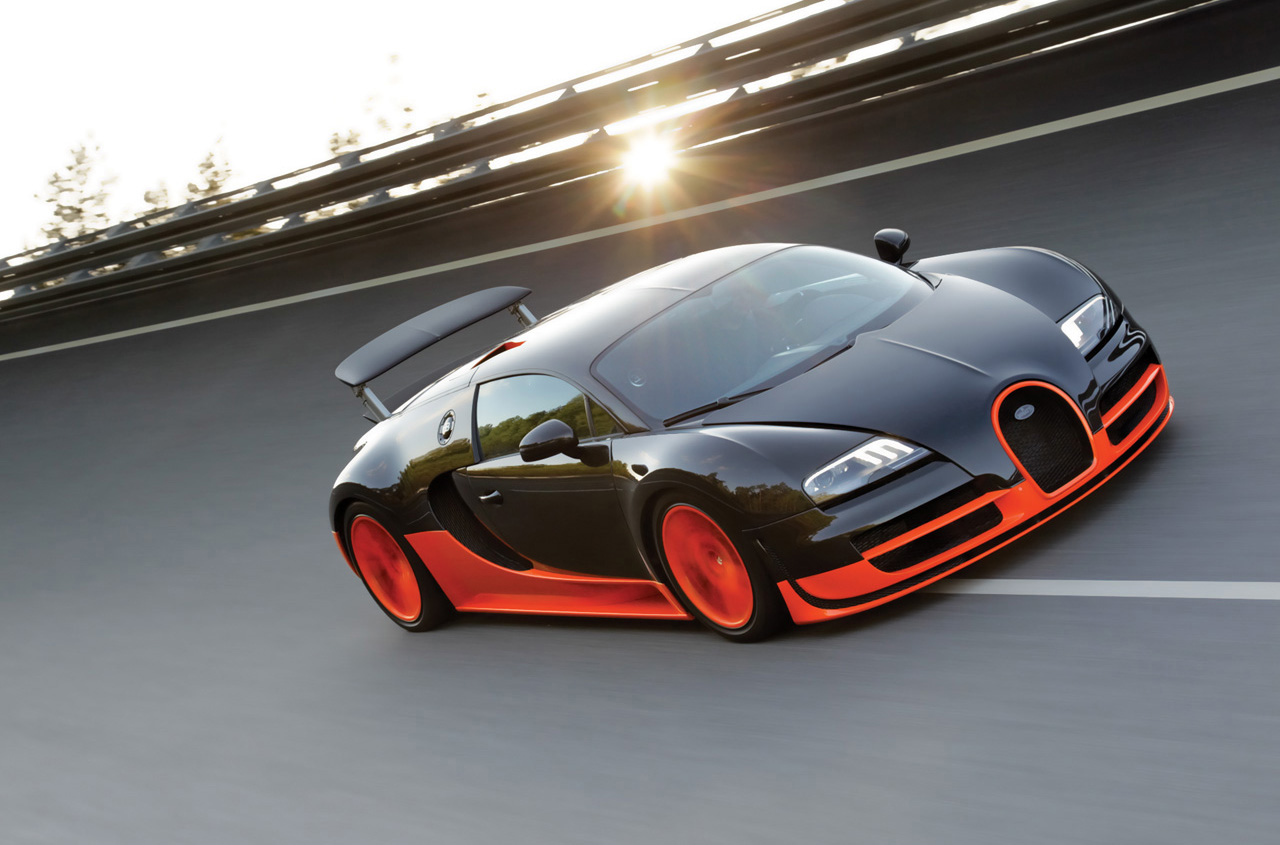
1. Bugatti Veyron: 267 mph, 0-60 in 2.5 secs. Aluminum, Narrow Angle 8 Liter W16 Engine with 1200 hp, base price is $1,700,000. Tested again on July 10, 2010 with the new 2010 Super Sport Version, the Bugatti Veyron once again claimed its title as the fastest car in the world at 267 mph.

2. SSC Ultimate Aero: 257 mph, 0-60 in 2.7 secs. Twin-Turbo V8 Engine with 1183 hp, base price is $654,400. Tested in March 2007 by Guinness World Records, The SSC Ultimate Aero was the fastest car in the world from March 2007 to July 2010 until recently it fell behind the Bugatti Veyron to take the #2 spot.
SSC Ultimate Aero Red doors open
3. Saleen S7 Twin-Turbo: 248 mph, 0-60 in 3.2 secs. Twin Turbo All Aluminum V8 Engine with 750 hp, base price is $555,000. Smooth and bad-ass, will make you want to show it off non-stop.
Saleen S7 Twin Turbo dark orange front view
4. Koenigsegg CCX: 245 mph, 0-60 in 3.2 secs. 90 Degree V8 Engine 806 hp, base price is $545,568. Made in Sweden, it is aiming hard to be the fastest car in the world, but it has a long way to go to surpass the Bugatti and the Ultimate Aero.
Orange Koenigsegg CCX
5. McLaren F1: 240 mph, 0-60 in 3.2 secs. BMW S70/2 60 Degree V12 Engine with 627 hp, base price is $970,000. Check out the doors, they looks like bat wings, maybe Batman need to order one and paints it black 1997 McLaren F1 on the road black
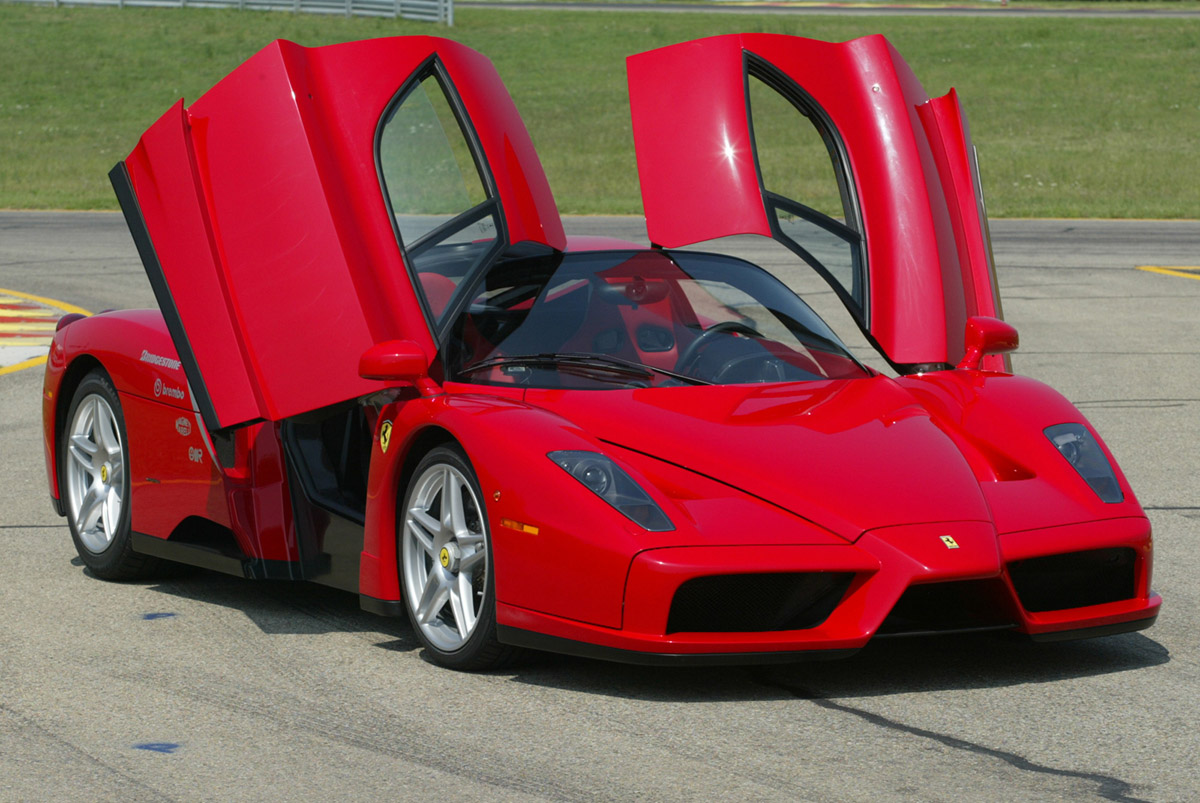
6. Ferrari Enzo: 217 mph, 0-60 in 3.4 secs. F140 Aluminum V12 Engine with 660 hp, base price is $670,000. Only 399 ever produced, the price goes up every time someone crashes.Ferrari Enzo doors open front view
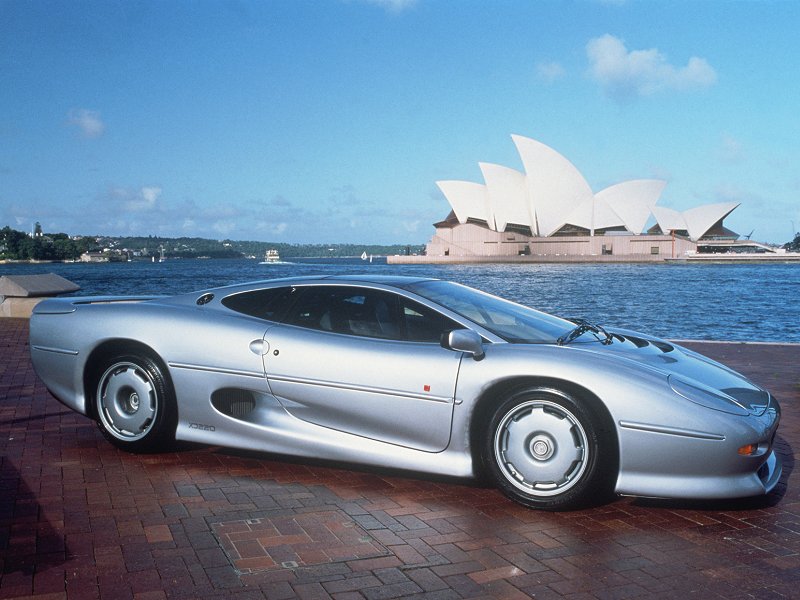
7. Jaguar XJ220: 217 mph, 0-60 in 3.8 secs. Twin Turbo V6 Engine with 542 hp, base price was $650,000. Made in 1992, this car still got what it takes to make the list.
Jaguar XJ220
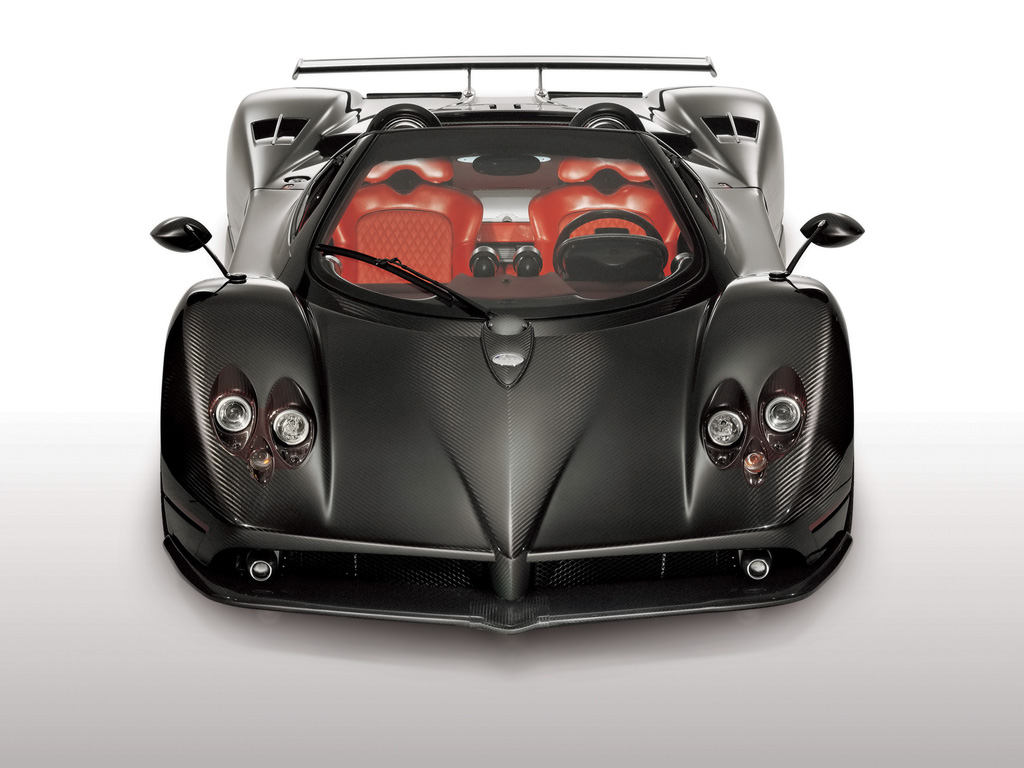
8. Pagani Zonda F: 215 mph, 0-60 in 3.5 secs. Mercedes Benz M180 V12 Engine with 650 hp, base price is $667,321. With a V12 motor, this baby can do much better.pagani zonda f
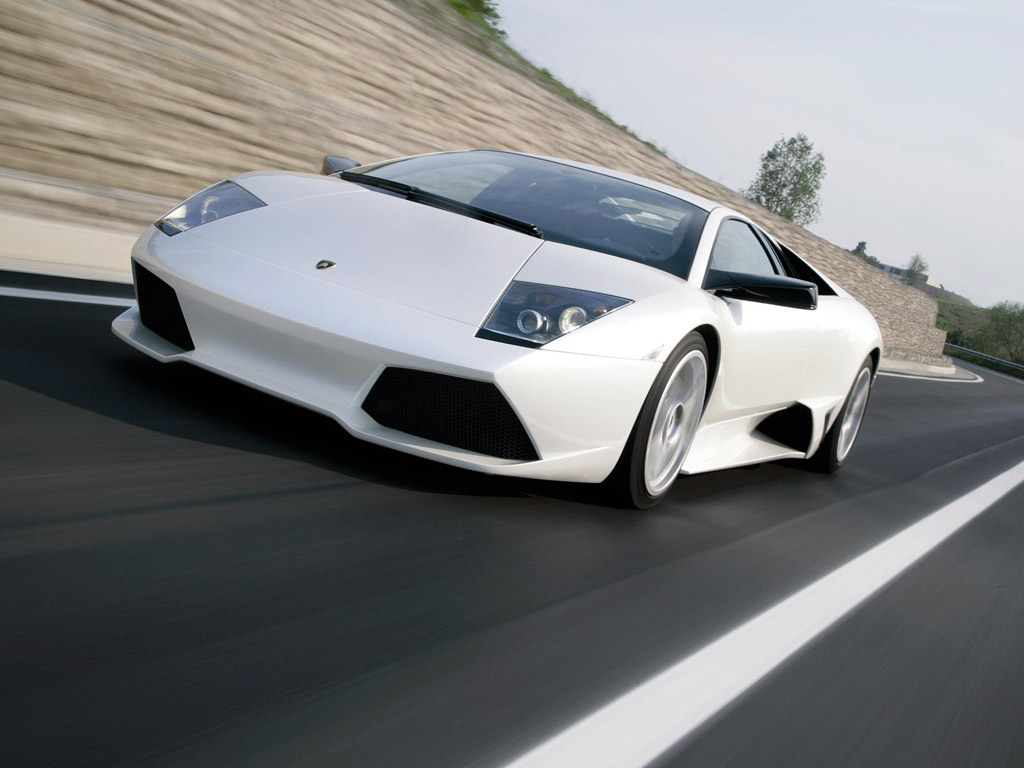
9. Lamborghini Murcielago LP640: 211 mph, 0-60 in 3.3 secs. V12 Engine with 640 hp, base price is $430,000. Nice piece of art, the design is very round and smooth.
White Lamborghini Murcielago front view
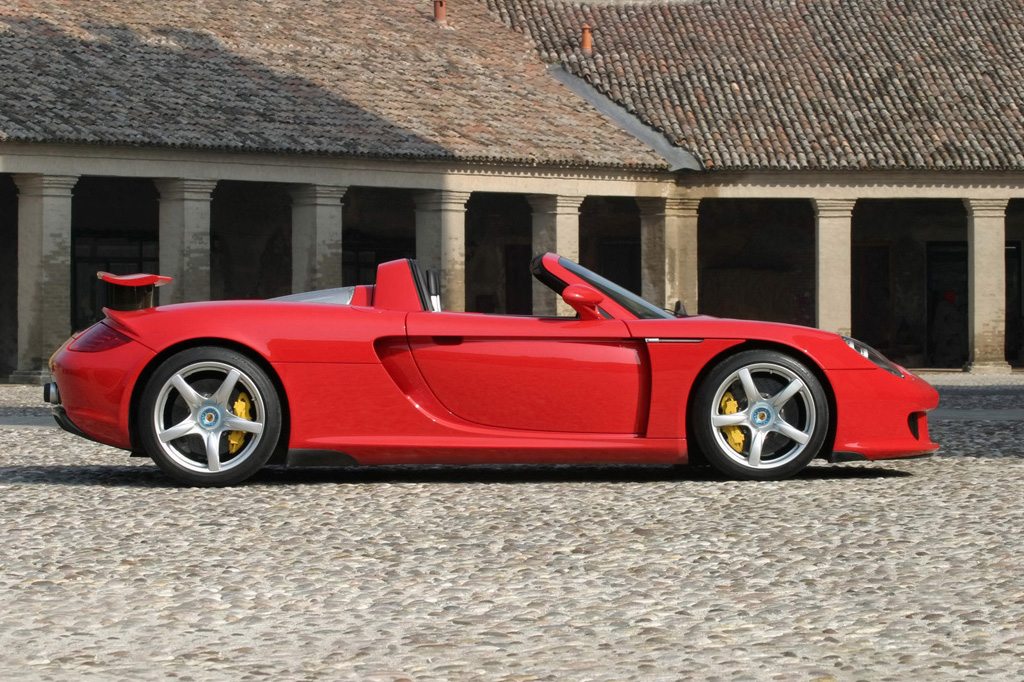
10. Porsche Carrera GT: 205 mph, 0-60 in 3.9 secs. Aluminum, 68 Degree, Water Cooled V10 Engine with 612 hp, base price is $440,000. The most powerful and most expensive Porsche  nearly made the list as #10.
Red Porsche Carrera GT side view